Charlotte homeowners with vented crawl spaces typically pay the price for having one. Once a month, on heating and cooling bills that are higher than they should be. Throughout the calendar year for pest control that often festers in the crawl space. And hopefully, only once for HVAC fixes and replacements that come with letting a damp crawl space stay that way for too long.
Homeowners with encapsulated crawl spaces pay as well, but the cost is up front, with one or only a few payments required. It’s the same crawl space moisture problem, with two ways to go about paying for it. The question is, which works best for you?
Do you want to keep paying Duke Energy extra each month for as long as you live in your home, or pay more right now to fix the problem for good?
Keep reading to learn more about how to make an informed decision about crawl space encapsulation. We’ll cover what crawl space encapsulation costs look like in Charlotte, how much you’re already spending without realizing it, and how to decide whether encapsulation is the right move in your home.
Table of Contents
The Problem with Vented Crawl Spaces
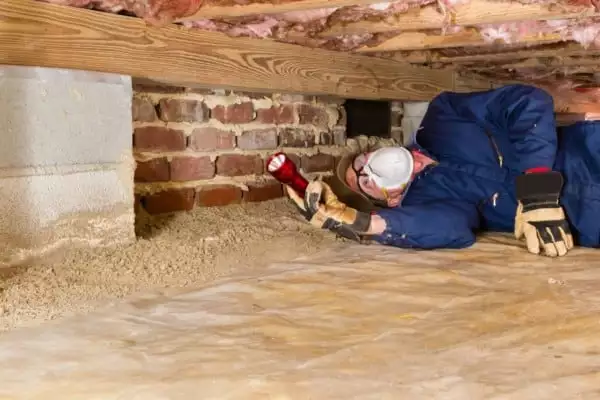
In Charlotte, where hot and humid weather is the norm for a large part of the year, vented crawl spaces work against you. Moist air gets sucked into your crawl space, hits cooler surfaces, condenses into water, and causes all kinds of problems. Mold, pests, damaged insulation, musty smells, and rotten wood joists and beams are some of the most common. As the humidity returns every year, the moisture problems compound, and the solutions get more daunting and expensive.
In terms of energy efficiency and your Duke Energy bills, vented crawls are a cost accelerator. Sticky outside air gets in during the summer months. The heated air rises throughout your home, prompting you to crank up the AC. Bills get cranked up too, sometimes by hundreds of dollars.
The problem flips in the winter. Cool air in the crawl space cools your floors and replaces the heat in your living spaces, making your furnace work harder as you turn it up to compensate. Bills rise. And they start adding up.
This is why crawl space encapsulation is such an appealing option for many Charlotte homeowners.
Encapsulation as the Solution
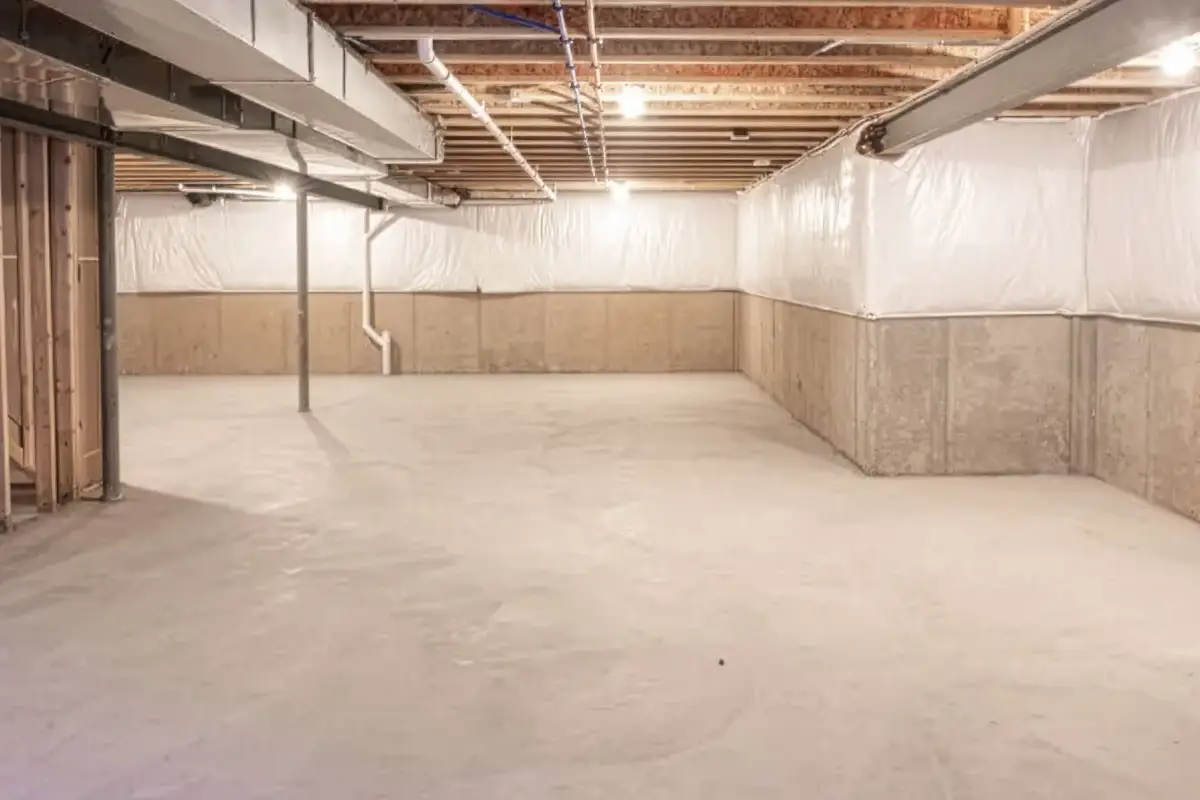
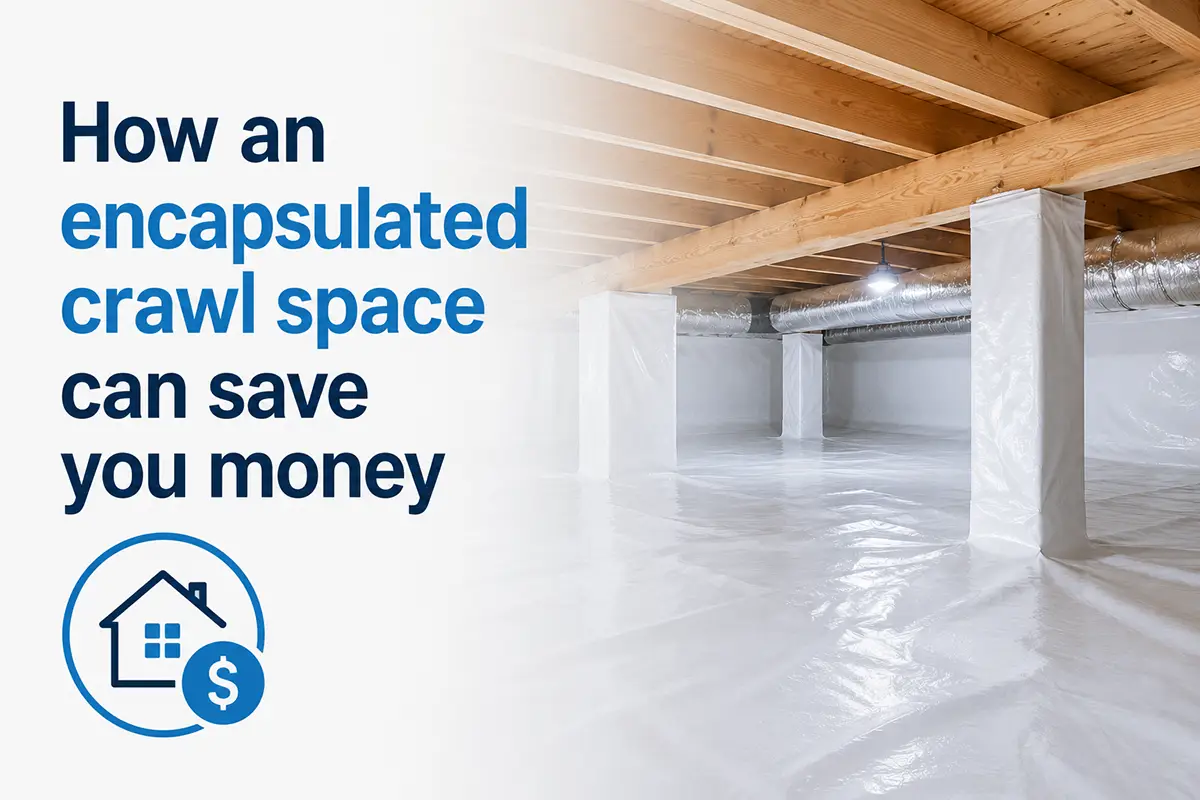
Crawl space encapsulation directly addresses the problems caused by a vented crawl space. During encapsulation, insulation and vapor barriers are professionally installed across the walls and floor of your crawl space once it has been properly waterproofed. Outside vents are sealed, and a dehumidifier is installed to provide year-round humidity control.
For a full breakdown of what a crawl space encapsulation involves, see our complete guide to crawl space encapsulation in Charlotte.
The Hidden Costs of Doing Nothing
Living in a home with a vented crawl space comes at a price, whether you encapsulate it or not. If you don’t, the bills just show up in different forms and on different timelines.
Here are some potential expenses a Charlotte homeowner might encounter if they don’t go the encapsulating route:
Crawl Space Repairs
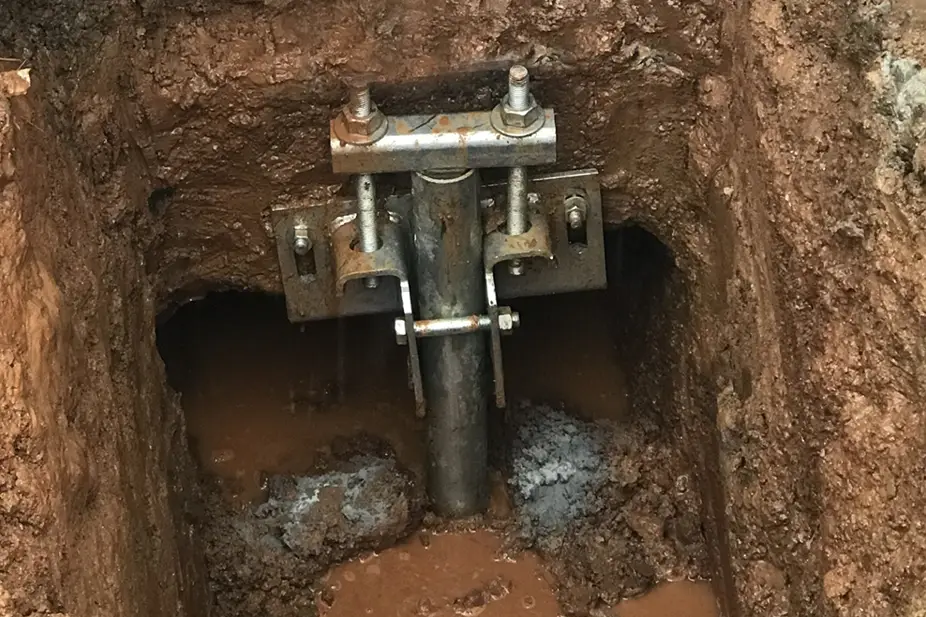
As discussed, moisture and crawl spaces don’t mix. Moisture can, and likely will, cause things under your house to break down over time. Depending on the intricacy of the repair, costs can range anywhere from a few hundred dollars to tens of thousands. Here are some ballpark figures to give you an idea of what you might be facing if moisture gets into your crawl space and wreaks havoc:
- Vent repair: typically, $50 to $200 per vent
- Insulation repair: between $750 and $3,500
- Structural repairs: typically, $1,000 to $15,000 for the more complicated, time-consuming jobs
- Waterproofing a 1,500-square-foot crawl space: anywhere from $4,500 to $15,000
Vapor Barrier Installation
A vapor barrier is a large plastic sheet placed across the dirt floor of your crawl space. The sheet helps keep groundwater from entering, a valuable function. However, a vapor barrier only covers the floor, and not the vents or cracks in the walls. While a vapor barrier is a viable solution, it’s not as comprehensive as a full encapsulation. For more information about vapor barriers and how they measure up to encapsulation, read our blog about choosing between a crawl space vapor barrier or crawl space encapsulation.
Mold Remediation
In Charlotte, professional mold remediation typically runs between $1,100 to $3,800 for a standard residential job, with the local average at $2400 per Angi’s cost data. Of course, these costs can fluctuate wildly depending on the size of the home in question and the amount of mold discovered. Larger infestations can push past $10,000.
Pest Control
Vented crawl spaces provide easy access for pests and vermin to move in. Pest removal can cost between $175 and $525, depending on how severe the infestation is. Total pest removal, cleaning, and sealing can run anywhere from $2,000 to $4,000 in the worst-case scenarios.
Higher Energy Bills
This is the one Charlotte homeowners feel every month, but rarely tie back to the crawl space. Open vents let conditioned air leak out and unconditioned air leak in. Your HVAC runs longer to compensate. In Charlotte, where the AC works hard from May through September, that extra runtime adds up to hundreds of dollars a year or more.
HVAC Wear and Tear
Ductwork in a damp crawl space can rust, sag, and develop mold. The blower works overtime fighting the humidity load. Air handlers in vented crawl spaces fail years earlier than the manufacturer projects. A replacement HVAC system runs $7,000 to $20,000 in the Charlotte market. Encapsulation doesn’t eliminate that cost, but it stops the crawl space from shortening the equipment's life.
When you add all those potential line items together, most Charlotte homeowners with vented crawl spaces are quietly spending $1,500 to $3,000 a year on the consequences. But it’s difficult to realize because timelines are different and there’s no fixed sum like there is with encapsulation. Over ten years, the “smaller” costs will likely clear the cost of encapsulation, and that’s before any of the big-ticket structural issues hit.
What Crawl Space Encapsulation Actually Costs
A full encapsulation in the Charlotte area generally runs between $6,000 to $20,000. The wide range depends on the size of your crawl space, the materials used, and the condition of the space before work begins. Most standard homes land in the $6,000 to $11,500 range.
- The process includes several steps and may involve some or all of the following:
- Removal of dirt and debris
- Installation of a drainage system with a sump pump
- Laying a polyethylene vapor barrier across the crawl space surface
- Sealing off openings, holes, gaps, and vents
- Insulating rim joists
- Installing rigid foam boards along interior crawl space walls
- Covering the interior crawl space walls with a polyethylene liner
- Installation of a dehumidifier
A few factors influence the final price:
- Size: More square footage means more material and more labor.
- Existing Condition: Standing water, mold, or rotted insulation adds prep work before the new system goes in.
- Plastic Thickness: Code-minimum 6 mil is cheaper than the 12-mil to 20-mil reinforced liners that last longer.
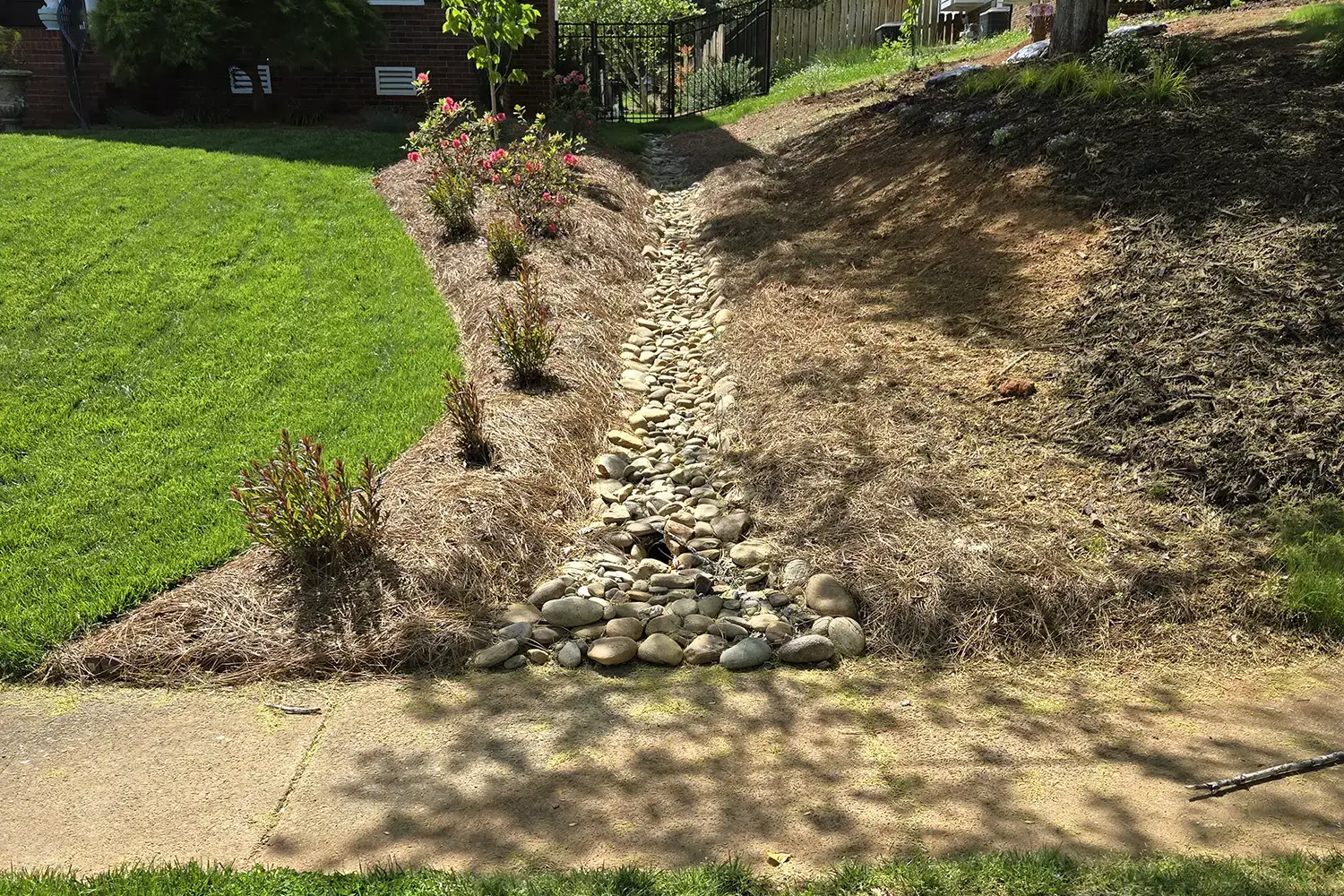
- Drainage Needs: A sump pump or French drain installation pushes the total higher.
- Access: Tight, low-clearance crawl spaces take longer to work in.
If you are still weighing a full encapsulation against a simpler fix, our article on vapor barrier vs encapsulation breaks down which one fits which situation.
The 15 Percent Number, Explained
A five-year field study run by Advanced Energy, a Raleigh-based nonprofit founded by the North Carolina Utilities Commission and jointly funded by the U.S. Department of Energy, found that houses with sealed crawl spaces saved 15 percent or more on annual heating and cooling energy compared to vented ones.
For a typical Charlotte home with a $250 monthly power bill in the summer, that is roughly $40 a month in savings during peak season. Over a year, $300 to $500. Over the life of the system, $5,000 to $7,000 in pure energy savings, which is enough to cover a significant portion, if not all, of an encapsulation cost.
Do the Math for a Charlotte Home
Here is how the numbers shake out for an average Charlotte home with a 1,500-square-foot crawl space:
- Encapsulation Cost: $9,000 (middle of the range)
- Annual Energy Savings: $400
- Avoided Pest Control: $200 per year on average
- Avoided Repair Costs Over 10 Years: $2,000 to $5,000
- Resale Value Bump: Could be $5,000 to $10,000, depending on the market
The straight payback period on energy savings alone runs about 17 years. Add in the avoided repairs, lower pest control bills, longer HVAC life, and the resale increase when you sell the house, and most homeowners recover their encapsulation investment in seven to ten years. Of course, the benefits keep running for another decade or two after that.
There is also the part you can’t put a dollar figure on. Cleaner air. Warmer floors in February. No musty smell in the hall closet. Knowing the wood holding up your house is not slowly rotting away underneath you. You can’t buy that kind of peace of mind, or can you? Crawl space encapsulation checks all those boxes, which makes it an investment that’s pretty easy to defend.
Frequently Asked Questions
Is crawl space encapsulation really worth the cost in Charlotte?
For most Charlotte homes, the answer is yes. Our climate makes vented crawl spaces a year-round liability. Between higher energy bills, premature HVAC wear, pest control, and the constant moisture damage to the wood under your house, the costs of doing nothing add up faster than most homeowners realize. Encapsulation pays for itself in seven to ten years on average and keeps delivering value long after that.
What is the cheapest way to deal with a damp crawl space?
A basic vapor barrier is the lowest-cost professional option (which is the one you want), and typically runs between $2,000 to $6,000. A vapor barrier slows ground moisture but doesn’t address humidity coming through open vents and cracks. For some Charlotte homes, that’s enough. For most, it is a go-between on the way to full crawl space encapsulation. Our vapor barrier vs encapsulation guide walks through when each solution is most appropriate.
How much does crawl space encapsulation cost for a 1,500-square-foot home?
In the Charlotte area, average-sized homes fall between $6,000 and $11,500 for a full encapsulation. Homes that need drainage work, mold remediation, or structural repairs before installation will obviously cost more.
Will encapsulation actually lower my power bill?
Yes, but the amount depends on your home. The Advanced Energy field study found average savings of 15 percent or more on annual heating and cooling energy. For Charlotte homes with HVAC equipment in the crawl space, the savings often run higher because the conditioned ducts no longer fight humidity and temperature swings.
Does encapsulation increase home value?
Buyers and home inspectors in the Charlotte market recognize encapsulation as a sign that the moisture issues common in this region have already been addressed. That typically translates to faster sales and a stronger negotiating position.
Can I encapsulate part of the crawl space to save money?
Not really. A vapor barrier across the whole floor is a better starter option than half an encapsulation. For the full picture, see our complete guide to crawl space encapsulation in Charlotte.
Ready to Run the Numbers for Your Home?
Moisture Loc has been helping Charlotte-area homeowners weigh the real cost of crawl space encapsulation for nearly 40 years. Family-owned and serious about giving you a straight answer instead of a sales pitch, we invite you to schedule a free inspection so you’ll know what your crawl space is costing you now and whether it makes sense to make a fix.