Does your yard have a problem area? You know the one.
A summer storm blows through, the sun comes out blazing hot right afterward, and your lawn dries out as expected. Except for the problem area. That one spot stays wet and muddy. Sometimes for a few days. Yard games have to work around it. Grilling and guests have to divert away from it. That particular patch of yard is working on its own schedule.
You've probably tried a few things to remedy the situation. Reseeding and aerating are obvious places to start. Maybe even leveling out the topsoil to eliminate any low spots. Nothing’s worked. As soon as the next storm comes through, the swamp returns.
What’s hard to fully understand is that the problem spot stays wet because water from somewhere else (your roofline, your neighbor's sloped yard, the natural grade of your own lot) is collecting there and has nowhere else to go. And in Charlotte, where the clay soil holds water like a sponge, and storms come in waves all summer, it’s easy for problem areas to become saturated and stay that way.
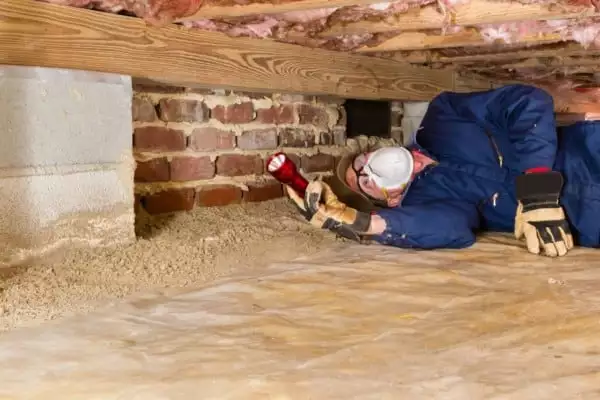
The same dynamics that turn a patch of yard into the Everglades can also push water toward your home’s foundation, crawl space, and basement. And that’s when things get more serious.
A wet patch on the lawn is an annoying eyesore. A wet spot under your house is an expensive problem.
Which is why a lot of Charlotte homeowners eventually end up typing the same question into their phones: “What's a French drain?” and wonder if it’s the thing that will fix the problem.
The good news is that French drains are one of the most reliable tools for redirecting water on properties that don't drain well on their own.
Below is the French drain explained from start to finish. That includes what it is, how it works, how long French drains last, and when to stop researching and start calling waterproofing experts about installation.
There’s a decent amount to learn about French drains. When you’re finished with the blog, check out our French Drain services page.
What is a French Drain?
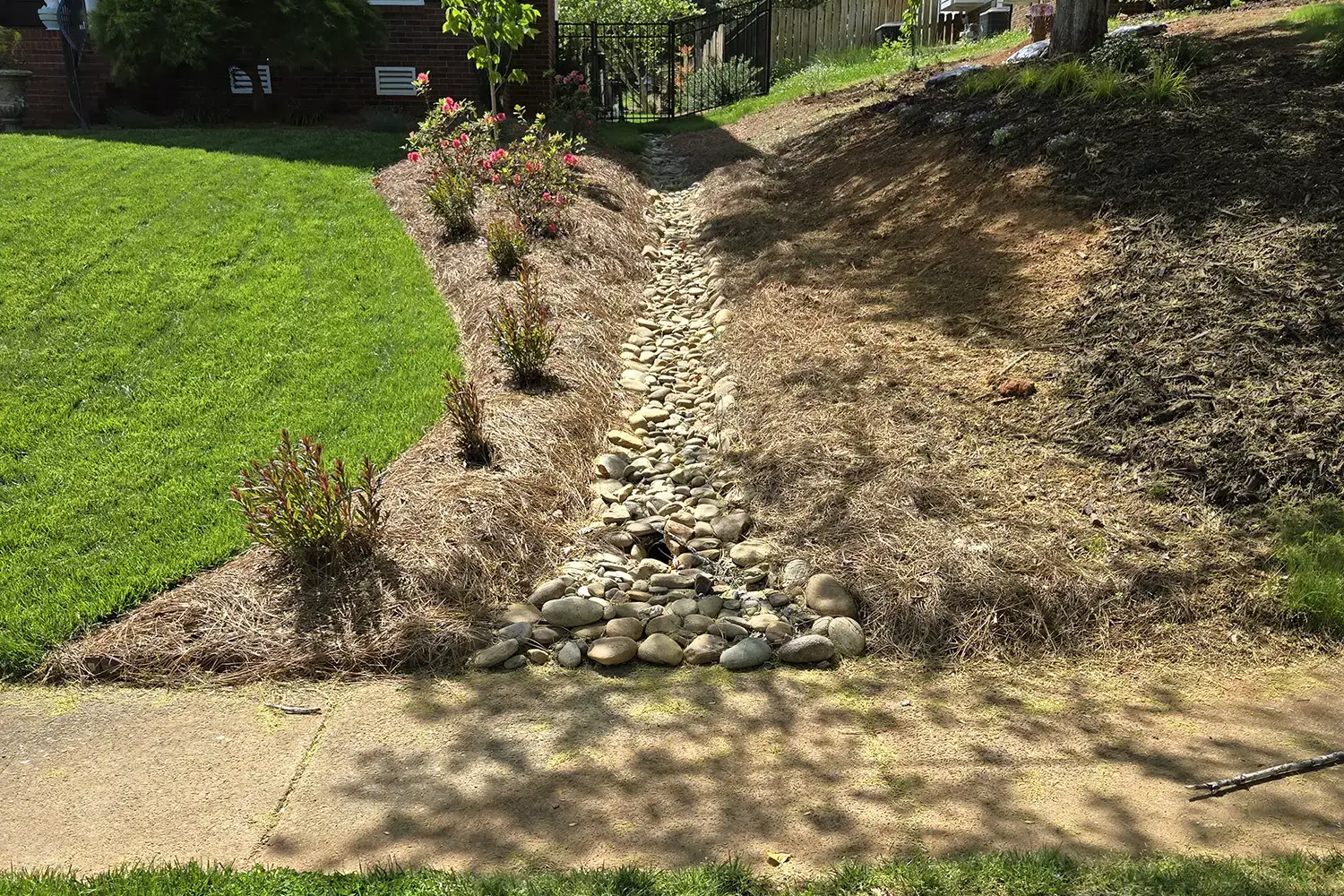
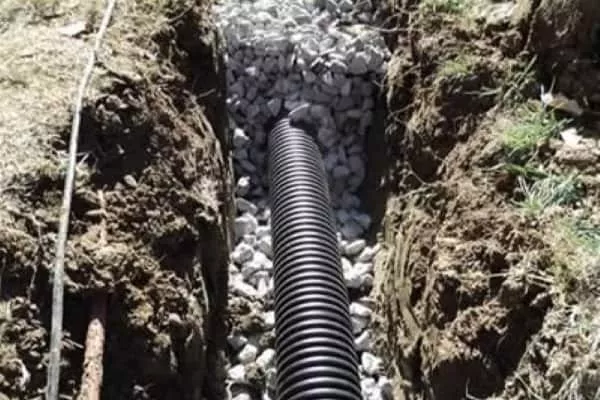
A French drain is a gravel-filled trench with a perforated pipe running through it that collects groundwater and surface water and then moves it somewhere else.
That's really it. There are no motors, no electricity (unless it ties into a sump pump), no moving parts. It’s simple. So simple that some people call it a French ditch. But its simplicity doesn’t undermine its effectiveness.
Did You Know?
The French drain actually has nothing to do with France at all. It’s named after Henry Flagg French, a 19th-century farmer, lawyer, and agricultural writer from Concord, Massachusetts. In 1859, he published Farm Drainage, a book that explained how trenches filled with stone could help waterlogged fields. The idea spread. More than 165 years later, we’re still using a version of Mr. French’s drainage system.
How Does a French Drain Work?
When water pools on the surface or builds up in the ground, it hits the gravel-filled trench and flows into it. Gravel has large air gaps between each stone, so water can move through it. Along the bottom of the trench sits the perforated pipe with small holes that let water in.
The pipe gets installed at a slight downward slope. Water enters the pipe, travels down with gravity, and exits at a safer spot, whether that’s a sump pump, an out-of-the-way destination, or the curb.
Think of a French drain as an underground gutter. A gutter on your roof catches water coming off the top of your house. A French drain catches it from below.
What Does a French Drain Do?
The purpose of a French drain is to move water away from a potentially harmful area to a more benign place.
For Charlotte homeowners, that usually covers a few scenarios.
- Crawl spaces that have puddles or wet spots after storms.
- Foundations cracking under the pressure of saturated clay.
- Swampy yards.
- Basements seeping in older homes on sloped lots.
- Retaining walls failing because groundwater pressure is building up behind them.
Do French drains work for all of these? Absolutely, but only when they're designed for the actual problem. A drain built to dry out a swampy yard isn’t the same as a drain built for a crawl space. Depth, pipe size, discharge location, and materials all change based on the specific scenario.
The purpose of French drain systems is to meet the needs of the problem. There’s no one-size-fits-all solution.
French Ditch Construction: What's in the Trench
Here's what proper French ditch construction entails:
The trench. The depth depends on the location. A surface yard drain might only be eight to twelve inches deep. A drain protecting a crawl space or foundation footing can run several feet down. The width usually lands between six and twelve inches, sloped toward the discharge point.
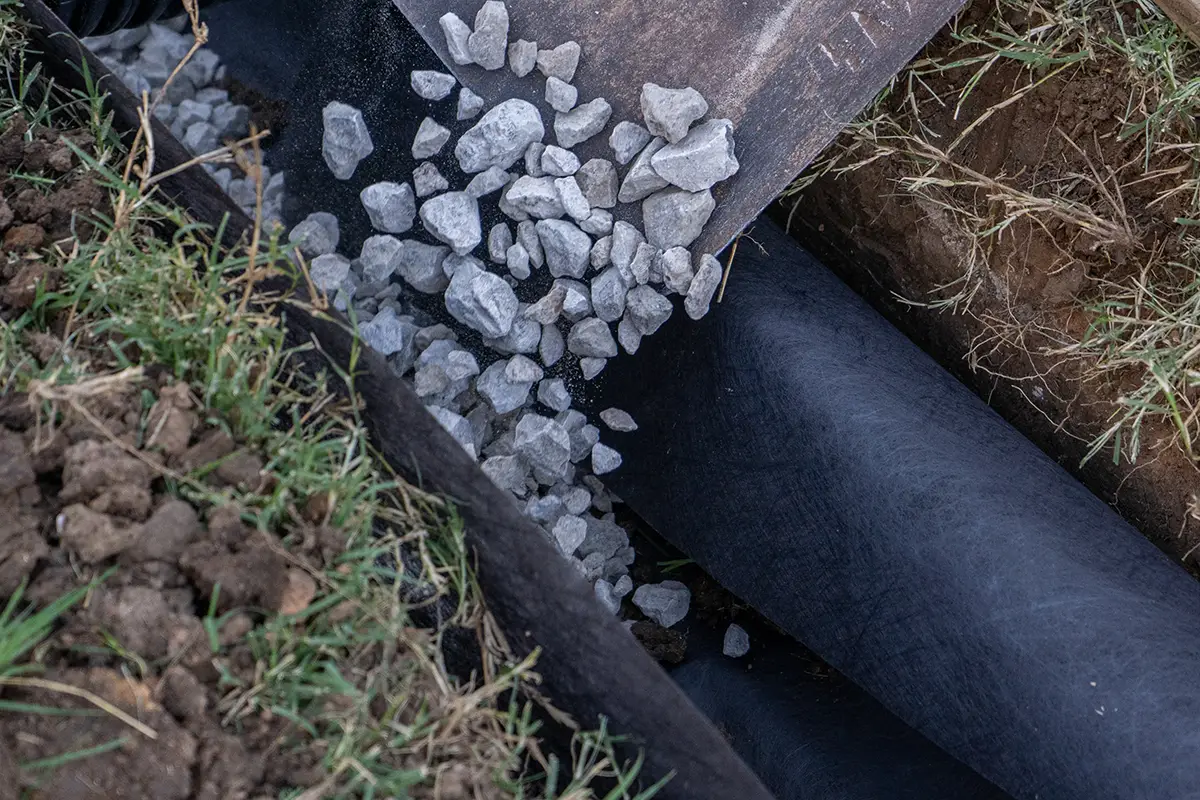
Landscape fabric. Before any gravel goes in, the trench is lined with a permeable geotextile fabric. This is the step most DIY jobs skip, but it's the one that decides whether a drain lasts a few years or a few decades. The fabric’s purpose is to block fine soil particles from washing into the gravel and clogging the pipe.
Gravel. Clean, washed stone goes in over the fabric. Contractors typically use three-quarter-inch to one-inch gravel because it resists compaction and has the right spacing for water to move through quickly.
The perforated pipe. A PVC pipe with pre-drilled holes sits on the gravel with perforations facing down. These downward-facing perforations let water rise into the pipe from below, which is often where water resides.
Blending in. A French drain can be wrapped and covered in soil to help it blend in with the rest of the yard.
Types of French Drains
A few different types of French drains show up regularly in Charlotte, and it helps to know what your contractor means when they discuss them.
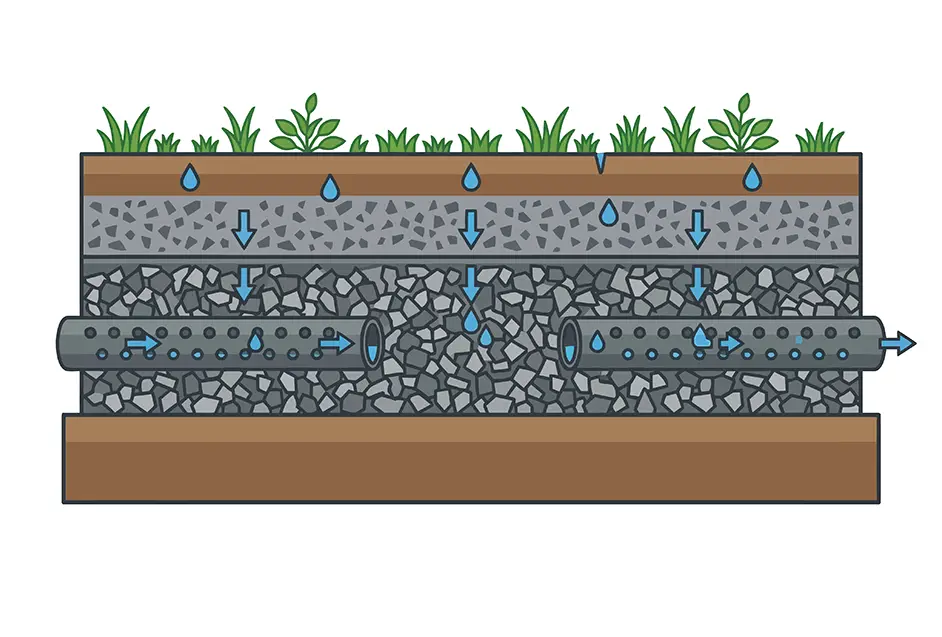
A curtain drain is a traditional French drain, like the ones we’ve been discussing, which uses only gravel and perforated pipe to move water.
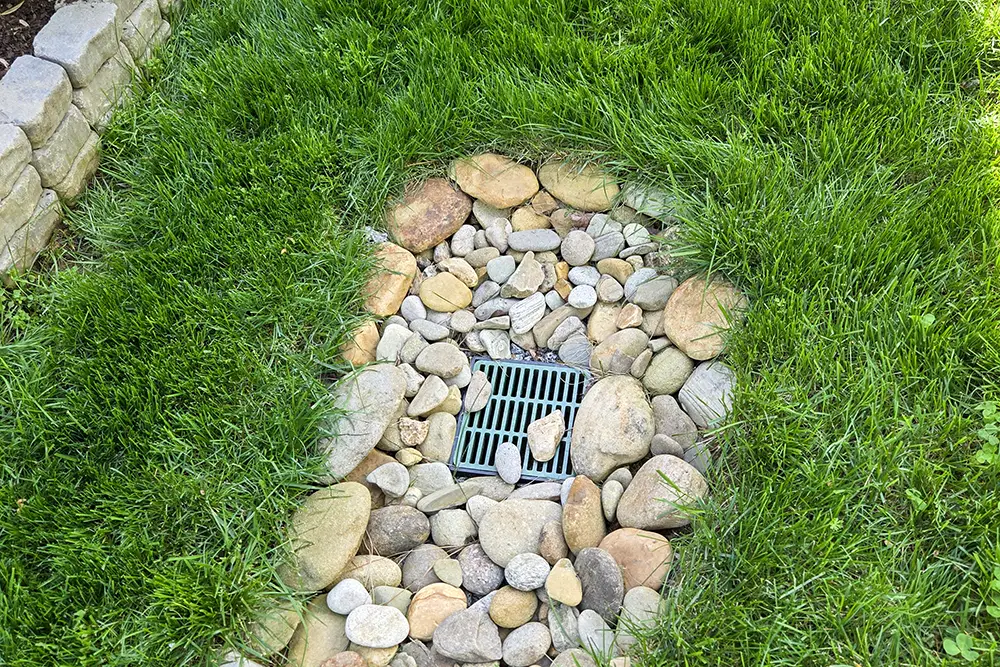
A collector drain moves both groundwater as well as surface water into the same drain. This drain requires a filter to prevent the pipe from filling with shifting soils.
How Long Do French Drains Last?
A professionally installed French drain should last decades. Some of the drains we've inspected in older Charlotte neighborhoods are still doing their job well past their 40th birthdays.
So, how long does a French drain last in practice? In practice, it typically depends on installation quality, what's around it, and whether anyone’s paying attention to maintenance.
How long should a French drain last under good conditions? Expect somewhere in the neighborhood of 3-5 decades. The biggest threat to a French drain is tree roots. Sediment is a close second, especially if the geotextile fabric used to construct the drain was cheap or skipped entirely.
How long do French drains last when installation is poor? Hard to say, but not long enough. Sloppy craftsmanship and installation can result in a drain that fails in only a few wet seasons.
Maintenance is mostly just paying attention. Watching for standing water in spots the drain is supposed to clear and keeping the discharge point clear of debris, leaves, and mulch is usually enough to ensure a properly installed French drain keeps things moving.
Why DIY Is Riskier Than It Looks
You can watch enough videos on YouTube to give building your own French drain a try. The problem is that the details of a French drain that determine its viability are the ones they don’t cover on camera. For example:
- Slope - A French drain that isn't pitched correctly or loses its pitch somewhere in the middle holds water instead of moving it.
- Discharge Point - You can’t route water onto your neighbor’s lawn. Charlotte has rules about this, and getting it wrong can mean tearing the whole drain up and starting over.
- Soil Knowledge - Clay behaves differently from some of the other soil varieties in the Carolinas. An expert knows how to interpret what's in the ground before the trench gets dug. A weekend DIYer usually finds out after. Guess which one is better?
Signs You Need a French Drain
A few tell-tale signs let you know you have a drainage problem that needs solving:
- The same patch or crawl space spot holds standing water after every storm
- Water shows up in your crawl space or basement after heavy rain
- Musty smells coming from under your home
- Cracks appearing in your foundation, driveway, or hardscape
- Mulch and topsoil washing away from the same spots every year
- A retaining wall starting to lean, bulge, or weep
- Mold
One of these by itself might be solvable with better grading or extended downspouts. Two or three together usually point to a real drainage problem that needs a system, not a patch.
When to Call an Expert
Water drainage is one of those areas where the cost of doing it correctly is almost always less than the cost of doing it twice. If you're seeing recurring water problems, the smart move is having an expert look at the whole picture (grading, gutters, soil, slope, existing drainage) before anyone digs a French ditch. A French drain could be the fix, or an important part of a bigger solution. It takes experience to know, so it’s best to let an expert solve your issues correctly the first time.
Moisture Loc has been handling Charlotte drainage, waterproofing, and crawl space work since 1988. We know how the local soil behaves, where water tends to gather around and under a home, and what kind of solutions are required to get rid of it.
If standing water, a wet crawl space, or the occasional pond in your yard is an ongoing problem, contact us for a free inspection.
A problem area doesn’t have to be a problem for long. Learn more about our French Drain services.
FAQ: French Drains in Charlotte
- What is a French drain, in one sentence?
- A French drain is a gravel-filled trench with a perforated pipe that uses gravity to move unwanted water away from your home or yard.
- How does a French drain work during heavy rain?
- Surface and ground water flow into and through the gravel, drop into the perforated pipe through the holes, and travel downhill to a safe discharge point. As long as the slope and discharge point stay clear, the system keeps working.
- What does a French drain do that a regular ditch can't?
- A ditch only catches water on the surface. A French drain collects water from the soil too, which is where most foundation and crawl space damage actually starts. It also stays hidden under your yard instead of cutting a visible line through your landscaping.
- How long do French drains last?
- A properly installed drain typically lasts 30 to 40 years. A poorly installed one can fail in far fewer. Tree roots and fine sediment are the biggest things to watch out for.
- Do French drains work in Charlotte's clay soil?
- Yes, but clay makes installation details even more important, not less. Clay holds water close, so the drain has to be deep enough and sloped enough to actually move it. A shallow drain in clay starts underperforming quickly.
- What's the difference between a French drain and a French ditch?
- Nothing. A French ditch is the older term you still hear in some parts of the Carolinas, especially from longtime homeowners.
- Can I install a French drain myself?
- You can, but the failure points, including slope, discharge, and soil reading, are the parts that don't look hard until they go wrong.
- How much does a French drain cost in Charlotte?
- It varies by length, depth, soil conditions, and whether the system ties into a sump pump or crawl space repair. A proper inspection will produce a real number instead of a guess.