
Everything You Need to Know About the Benefits and Drawbacks of Crawl Space Encapsulation.
In Charlotte, where summer humidity soars and the clay soil holds water like a sponge, the crawl space does more work, and possibly more damage, than any other place in your house.
That’s because the crawl space impacts the air your family breathes, the sturdiness of your floors, the smell in your house, and your monthly energy bill.
Being aware of what’s going on down there, and red-flagging potential issues before they become serious, is an ongoing responsibility for Charlotte homeowners.
This is a guide to crawl space encapsulation for homeowners across Charlotte and the Carolinas. We will walk through what crawl space encapsulation is, crawl space encapsulation pros and cons, what it costs, how long it lasts, and how to tell whether an encapsulated crawl space makes sense for your home.
You don’t need to spend a lot of time in your crawl space, but it’s important to know what to look for while you’re down there. The information in this guide will help.
Table of Contents
What is an Encapsulated Crawl Space?
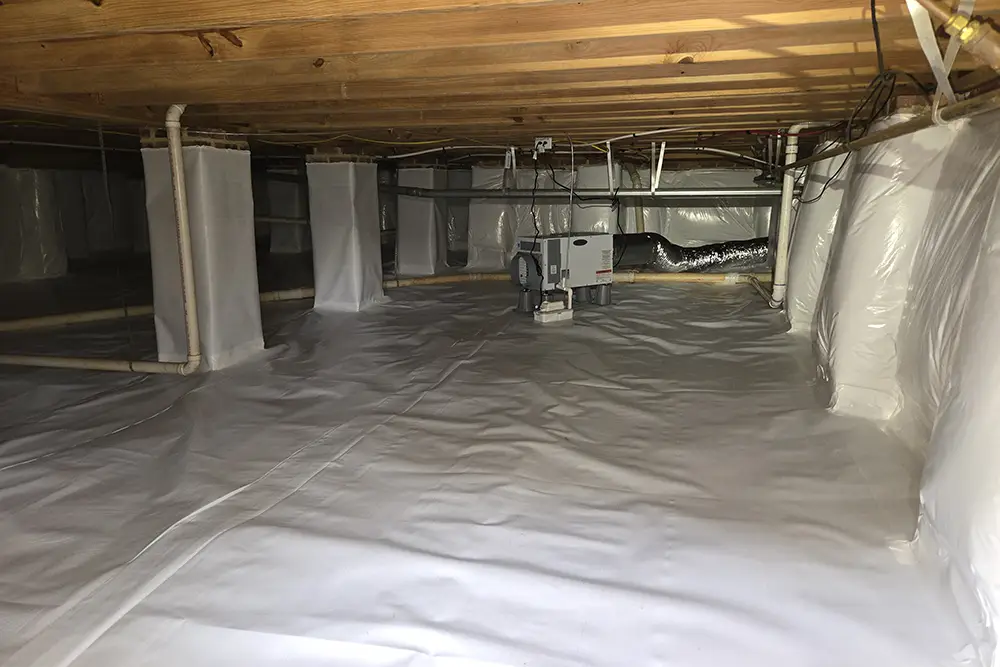
Encapsulation is a moisture-control solution for the area under your home. A professional crew lines the floor and walls of the crawl space with a heavy-duty polyethylene barrier, usually 12 to 20 mil thick, then seals every vent and access point. A dehumidifier and sump pump round out the system, so the space stays dry year-round.
What you’re left with is a clean, sealed, conditioned space that’s the exact opposite of the dark, damp, scary place that was there before it. When you ask, “What is an encapsulated crawl space?” it’s right there in the name: a protective “capsule” for your crawl.
Anyone considering crawl space encapsulation should know the work is more than just rolling out some heavy plastic. Done right, it includes water management, vent sealing, insulation upgrades, and humidity control, all working together. At Moisture Loc, our team deploys our own comprehensive crawl space encapsulation system, which is designed to provide long-term moisture relief.
Why Charlotte Crawl Spaces Need Extra Attention
Charlotte’s climate is not ideal for homes with vented crawl spaces. When warm, humid air hits the cooler surfaces under your home, it condenses. The wood gets damp. The insulation gets damp. Everything gets damp. And when those conditions are present, bad things happen. That’s when mold, pests and musty odors make their way into your home. And the air your HVAC pulls in from below your house carries some of this less-than-desirable air into your living spaces.
If you own a home with an unsealed crawl space in Charlotte, you need to know that the local conditions are working against you. That’s why professional crawl space encapsulation services in Charlotte are a pretty common thing, especially compared to other areas of the country.
The Pros and Cons of Crawl Space Encapsulation
The Benefits
There are a number of benefits of crawl space encapsulation that can help sway a homeowner’s decision, including:
-
Lower energy bills
As air gets pulled into your unsealed crawl space, money leaks out of your bank account. With an unsealed crawl, your HVAC system has to work that much harder to compensate for the influx of warm air. Once the space is sealed, your system can relax. A five-year field study by Advanced Energy, a Raleigh-based nonprofit, found that homes with closed crawl spaces saved 15 percent or more on annual heating and cooling energy compared to homes with vented crawl spaces. Fifteen percent a year adds up. A free inspection will tell you if you’re letting that money walk out of your crawl space with nothing to show for it.
-
Better indoor air quality
About 40 percent of the air you breathe upstairs comes from the crawl space. If the crawl space is damp, moldy, and full of musty smells, you are breathing it in. Sealing it changes what enters your living space.
-
Mold, mildew, and moisture control
Mold needs moisture and humidity to thrive. A sealed and dehumidified crawl space stops new mold from forming and protects the wood framing and insulation under your house from deteriorating.
-
Pest deterrent
Mice, spiders, termites, ants, flies. An unsealed crawl space is a highway for every kind of pest in Charlotte, with the type changing by the season. Encapsulation closes the highway. The pests already in your walls will still need to be dealt with, but new ones can’t get in once the space is sealed.
-
Usable storage space
Once your crawl space is sealed, you have a clean, dry, airtight area under your house. Add a well-insulated access door, and you can treat it like any other storage space.
-
Protects your home's structure
Moisture under your house leads to rotten beams and joists, sagging floors, and foundation damage. We see it constantly in Charlotte’s older homes. An encapsulated crawl space protects the skeleton of your house from the problems that accumulating moisture can cause.
-
Higher resale value
A documented encapsulation is a big benefit during a home sale because it tells everyone the moisture problem most Charlotte homes face has already been solved.
Problems with Crawl Space Encapsulation
A crawl space encapsulation is a routine but not a simple procedure. So, it’s important to understand the potential problems with crawl space encapsulation before you commit. Knowing the crawl space encapsulation pros and cons upfront helps you make a better decision and choose the right professionals to do the job.
-
Upfront cost is significant
A crawl space encapsulation is an investment, albeit one with a virtually guaranteed upside.
-
HVAC may need adjustment
When the crawl space gets sealed, homes with older systems sometimes need an HVAC tune-up or an upgrade to keep everything running safely and efficiently.
-
Some maintenance is required
After an encapsulation, you need to inspect the space annually, change the dehumidifier filter, and check for any tears or seam issues.
-
Bad installation creates new problems
A poorly executed encapsulation is worse than no encapsulation at all. If vents and seams are not properly sealed, moisture gets trapped behind the barrier with nowhere to go. That is why vetting your encapsulation company matters so much.
Cost of Crawl Space Encapsulation
The cost of crawlspace encapsulation in the Charlotte area generally runs between $5,000 and $15,000, with most homes landing somewhere in the middle. National averages put a typical project at around $5,500 to $8,000 for a 1,500-square-foot home.
A few things influence the price:
- The size of your crawl space, with larger spaces costing more
- The condition of the space, including existing mold, standing water, or compromised insulation
- Vapor barrier thickness, since 6 mil meets code, but the thicker the better
- Accessibility, because low-clearance crawl spaces are harder to work in
As we mentioned, an encapsulation is an investment. But most Charlotte homeowners recover the cost within seven to ten years through lower energy bills, avoided structural repairs, and a higher home resale value. We get into the financial repercussions in our article on crawl space encapsulation cost, including the average cost to encapsulate a crawl space and how the savings stack up over time.
Vapor Barrier vs Encapsulation
These two terms typically get used interchangeably. They shouldn’t. A vapor barrier is a sheet of plastic laid across the dirt floor of the crawl space. It slows ground moisture from rising up. This is valuable but not all-encompassing.
An encapsulation barrier covers the floor, walls, and sometimes the ceiling. Every vent and opening is sealed, and a dehumidifier and sump pump are used. The result is essentially a new room under your house.
Which one is right for your home depends on your moisture situation, your budget, and how long you plan to stay. We compare both side by side in our guide to vapor barrier vs encapsulation, including details on the right plastic for under house and which moisture barrier for crawl spaces makes sense for different homes.
How Long Does Crawl Space Encapsulation Last?
A professionally installed encapsulation lasts 15 to 20 years on average. The lifespan depends on three things: the thickness of the vapor barrier, the quality of the installation, and how well you keep up with annual inspections.For a deeper look at what affects how long encapsulation lasts, what the typical encapsulation lifespan looks like in the Carolinas, and encapsulation without remodeling options, check out our longevity guide.
Signs Your Charlotte Home May Need Encapsulation
Beyond inspecting and finding visible mold or condensation in your crawl space, these are some of the most common signs that your home may need encapsulation:
A recurring musty smell in the main parts of your home
- High humidity inside the house
- Allergies, asthma, or respiratory issues that get worse at home
- Insect or rodent activity that keeps coming back
- Sagging floors
- Energy bills creeping higher each year for no clear reason
Any one of these can mean it is time to schedule a crawl space encapsulation inspection.
What to Expect from a Professional Encapsulation
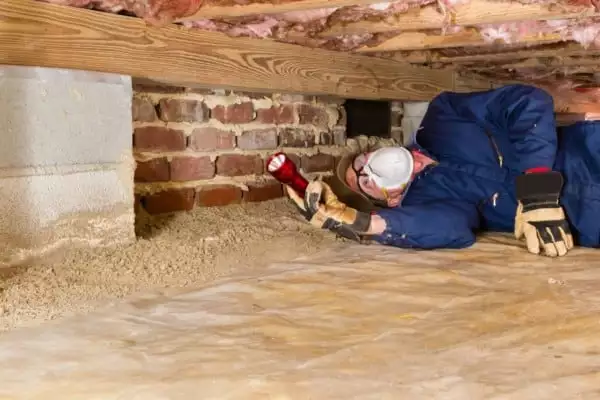
Here is what the process looks like when you partner with professionals:
- Inspection. A technician assesses moisture levels, mold, structural damage, pest activity, and access points. You should get a full report and quote.
Cleanout. Old insulation, debris, standing water, and any compromised material are removed. - Repairs. Foundational repair is an important part of the process before the barrier goes in. Make sure the company you hire can do this kind of work.
- Vent sealing. Vents get sealed shut.
- Barrier installation. A heavy-duty polyethylene liner covers the floor and walls.
- Dehumidifier and drainage. A commercial-grade dehumidifier and sump pump help turn this into a long-term solution.
- Final inspection. A walk-through and warranty.
Frequently Asked Questions
- Is crawl space encapsulation really worth it for my home in Charlotte?
- For most Charlotte homes, yes. Our climate is tough on vented crawl spaces. Between the humidity, the rainfall, and the clay soil, the moisture problem is consistent. Encapsulation pays for itself with lower energy bills, fewer repairs, better air quality, and a stronger home resale price.
- What are the biggest problems with crawl space encapsulation?
- The three biggest issues are upfront cost, the possible need for an HVAC adjustment, and the annual maintenance required to keep the system working. Poor installation is also a real risk. See our section on problems with crawl space encapsulation above for the full picture. The first step is figuring out if crawl space encapsulation is even necessary.
- How much does crawl space encapsulation typically cost?
- Most projects in the Charlotte area run between $5,000 and $15,000. A standard 1,500-square-foot home with no major repairs typically lands around $5,500 to $8,000. Costs go up if you need mold remediation, significant debris removal, or a thicker vapor barrier. For a full breakdown of pricing, see our guide on the average cost to encapsulate a crawl space.
- Does crawl space encapsulation increase home value?
- Yes. Buyers and inspectors recognize encapsulation as a sign that the moisture issues that are commonplace in Charlotte homes have already been addressed.
- How long does a crawl space encapsulation system last before it needs maintenance or replacement?
- A properly installed system lasts 15 to 20 years on average. The vapor barrier is the most durable component. Dehumidifiers and sump pumps may need servicing or replacement somewhere in the 8-to-12-year range. More on this in our article about encapsulation lifespan.
- Can crawl space encapsulation fix mold, odors, or sagging floors?
- Encapsulation stops the cause of those problems, but doesn’t fix pre-existing problems. Mold needs remediation before the barrier goes in. Musty odors usually disappear within a few weeks after encapsulation. Sagging floors caused by rotted joists need structural repair first, then encapsulation prevents the problem from coming back. A proper inspection will identify what needs to happen and in what order.
Ready to Get Started?
Moisture Loc has been helping Charlotte-area homeowners solve their crawl space moisture problems for nearly 40 years. We are family-owned, locally rooted, and serious about doing encapsulations that last. If you are wondering whether encapsulation makes sense for your home, schedule a crawl space encapsulation inspection today. The inspection is free, and you will leave with a clear road forward.